PLA or PETG: which material for which décor object?
Biosourced versus recycled, interior versus exterior, matte versus satin: PLA and PETG don't play the same role in a home. A simple decision framework from a workshop that prints everything in-house, to choose the right material without technical jargon.
By L'atelier RE3DLINE
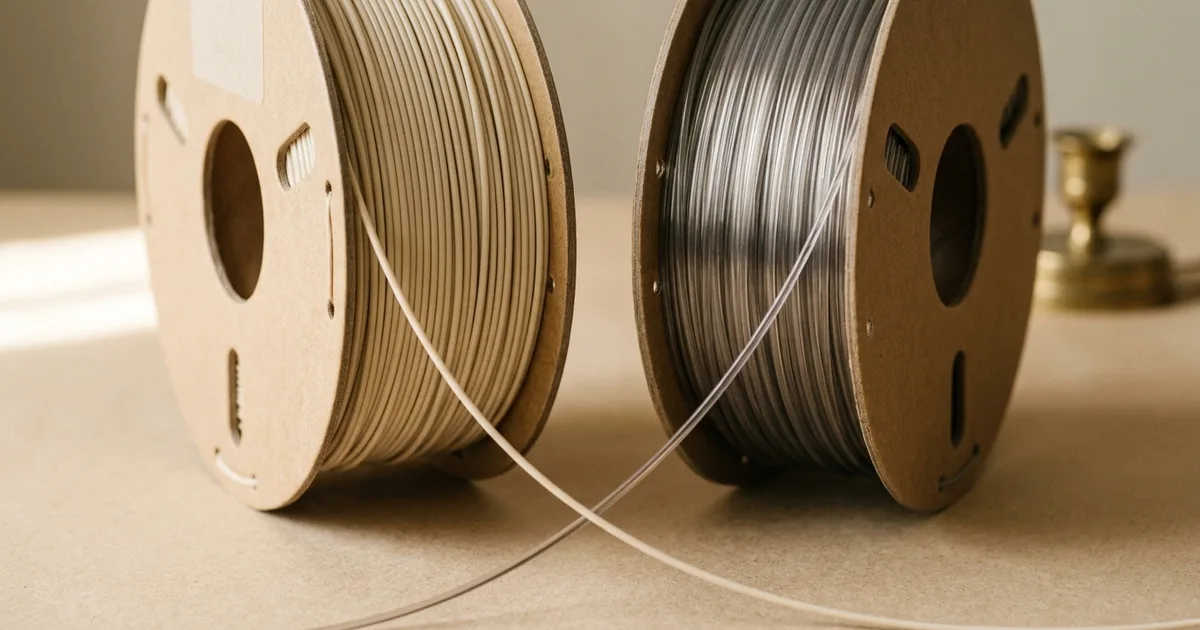
PLA and PETG are the two main materials for 3D-printed décor. PLA, biosourced and precise, excels indoors. PETG, often recycled, withstands heat and UV: it's the material for outdoors. Our current catalogue is printed in PLA, and PETG will join the workshop in the coming months.
Two materials, two temperaments
PLA (polylactic acid) is a plant-based plastic, made from corn starch or sugar cane. It's the leading material for 3D-printed décor: it deposits with great precision, offers a matte and crisp finish, and comes in a very wide colour range, including around twenty colors in our catalogue. We've devoted an entire article to its environmental impact, without pulling punches: is PLA really ecological?
PETG is a cousin of PET, the plastic used in water bottles, modified for printing. Its main advantage today: it exists in a recycled version, made from material already in circulation. Slightly satin-finished and a little more flexible than PLA, it withstands what makes PLA bend: heat and UV rays.
On paper, the two look similar. In a home, they play very different roles.
A décor buyer's decision framework
Forget printer spec sheets: to choose the material for a décor object, four questions are enough.
Where will the piece live? This is the decisive criterion. PLA begins to soften between 55 and 60°C: no living room reaches that temperature, but a sun-baked terrace in August, a car rear shelf or the edge of a stove do. PETG holds between 75 and 85°C and resists UV. Interior: PLA. Permanent exterior: PETG.
What finish are you after? PLA gives matte surfaces and very fine details, it's the best at capturing the fine striations and textures of our vases. PETG has a slight satin finish, an almost translucent depth on certain colours, very beautiful on minimalist pieces.
Will the piece be handled? For a displayed object, both materials are more than solid enough, as we detailed in our article on the real durability of 3D-printed objects. PLA is slightly more rigid, PETG slightly more flexible: it bends where PLA would mark.
Which material story do you prefer? PLA is biosourced: it comes from plants. Recycled PETG gives a second life to plastic already produced. Two different answers to the same requirement: not to make disposable objects.
In practice: which material for which object?
Vases and single-stem vases: PLA. They live indoors, in a living room or on a shelf, and benefit from the fine deposition of the material. On the water question, we refer you to our honest answer: can you put water in a 3D-printed vase?
Pots and cache-pots: PLA indoors without restriction. For a south-facing windowsill or a year-round terrace, the right material will be PETG; until it arrives at our workshop, our pots thrive indoors and in shaded outdoor spots, as we explained in our guide to summer terrace décor.
Statues, One Line objects, desk accessories: PLA, without hesitation. These pieces experience neither heat nor UV, and PLA's precision serves their graphic silhouettes.
Candle holders: PLA, with one strict rule. These pieces are designed for LED tea-light candles and never for an open flame, precisely because the wax of a lit candle operates in the zone where PLA softens. PETG will raise this threshold without changing the rule, as we explain in which candle to put in a 3D-printed candle holder.
Birdhouses, feeders, garden décor: this is PETG's natural territory, outdoors in all weather. It's precisely one of the reasons we're preparing its arrival at the workshop.
Where does RE3DLINE stand?
Today, our catalogue is printed 100% in biosourced PLA, in our Guérande workshop. Recycled PETG will join our machines in the coming months: we're taking time to select serious recycled supply and qualify each model on our printers before offering it to you. That's the price of entirely in-house production: when a material arrives with us, it's been tested on the pieces you'll receive, not on a spec sheet.
Until then, the rule is simple: our current pieces live indoors, where they're at home for decades. Browse our collections, each object is made to order in 5 to 7 days in around twenty colors. And if you're unsure about the material for a particular use, write to us: the workshop that prints your pieces is best placed to answer.
RE3DLINE workshop, Guérande
Sources
The temperatures and properties cited in this article are based on public references:
Prusa Research, comparative table of 3D printing materials (deflection temperatures and PLA and PETG properties): help.prusa3d.com
Tymrak B.M., Kreiger M., Pearce J.M., "Mechanical properties of components fabricated with open-source 3-D printers under realistic environmental conditions", Materials & Design, vol. 58, 2014: sciencedirect.com
Frequently asked questions
- What is the difference between PLA and PETG?
- PLA is a biosourced plastic made from corn starch or sugar cane. Precise and matte, it's ideal for indoor décor but softens between 55 and 60°C. PETG, a cousin of PET from water bottles, exists in a recycled version: it holds between 75 and 85°C, resists UV and suits outdoor use.
- Is PETG more durable than PLA?
- Not exactly. PLA is slightly more rigid, PETG slightly more flexible: it bends where PLA would mark. For a decorative object sitting on a shelf, both are more than solid enough. The real difference comes down to heat and UV, where PETG has the advantage.
- Can you leave a PLA object outside?
- Not in direct exposure. PLA begins to soften between 55 and 60°C, a temperature a sun-baked terrace can reach locally, and it doesn't handle UV well over time. It's reserved for indoors and shaded outdoor spots. For permanent outdoor use, the reference material is PETG.
- Is recycled PETG ecological?
- It's one of the most relevant recycled plastics: it gives a second life to material already produced, often from bottles, and its durability avoids repurchasing. As with PLA, the key remains making made-to-order objects that last, rather than stock that ends up discounted or thrown away.