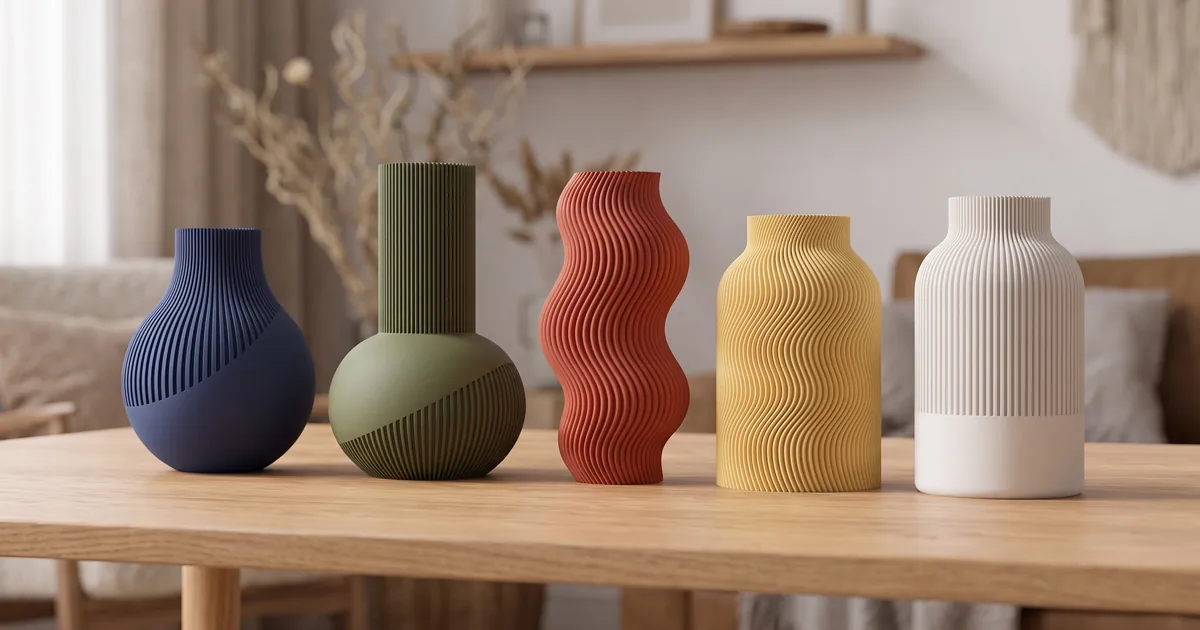
Personalised 3D printed vase in colour: compose yours
A vase's colour should not be a paid option. With us, it isn't: around twenty colours on each model, visible in one click on the colour swatch, and a price that only changes with size or finish.
By L'atelier RE3DLINE
A 3D printed vase is personalised first and foremost by its colour. At RE3DLINE, each model comes in around twenty colours and none incurs an extra charge: click on a swatch and the vase displays in your chosen shade. Only size and finish affect the price, starting from £14.
Colour, the option that isn't one
In conventional home decor, colour costs extra. Not because pigment is expensive, but because a retailer must buy stock in advance. To offer eight models in twelve shades, you need to tie up nearly a hundred references in a warehouse, with no way of knowing which will sell. The result: manufacturers shrink the palette to three or four safe bets, and charge extra for the rest if they offer them at all.
We don't have that problem, because we don't hold stock. Each piece is printed to order in our Guérande workshop. When you choose Turquoise Blue instead of Beige, the only difference in the workshop is the filament spool we load onto the machine. Print time is the same, material is the same, quantity is the same. There's therefore no reason to charge you for the difference, and we don't.
This applies to our entire vase range, without exception. Colour adds zero pence, from first to last.
Around twenty colours, three families
The palette was built for French interiors, not a supplier's colour chart. It reads in three families, and that's the simplest way to navigate it.
Neutrals first: Ivory White, Beige, Wood, Marble Sandstone, Marble Grey. These are the shades that blend in, the ones you choose when the vase should complement the room without commanding it. The speckled tones in the Marble range add a mineral grain that breaks up the regularity of printing, very useful on larger formats.
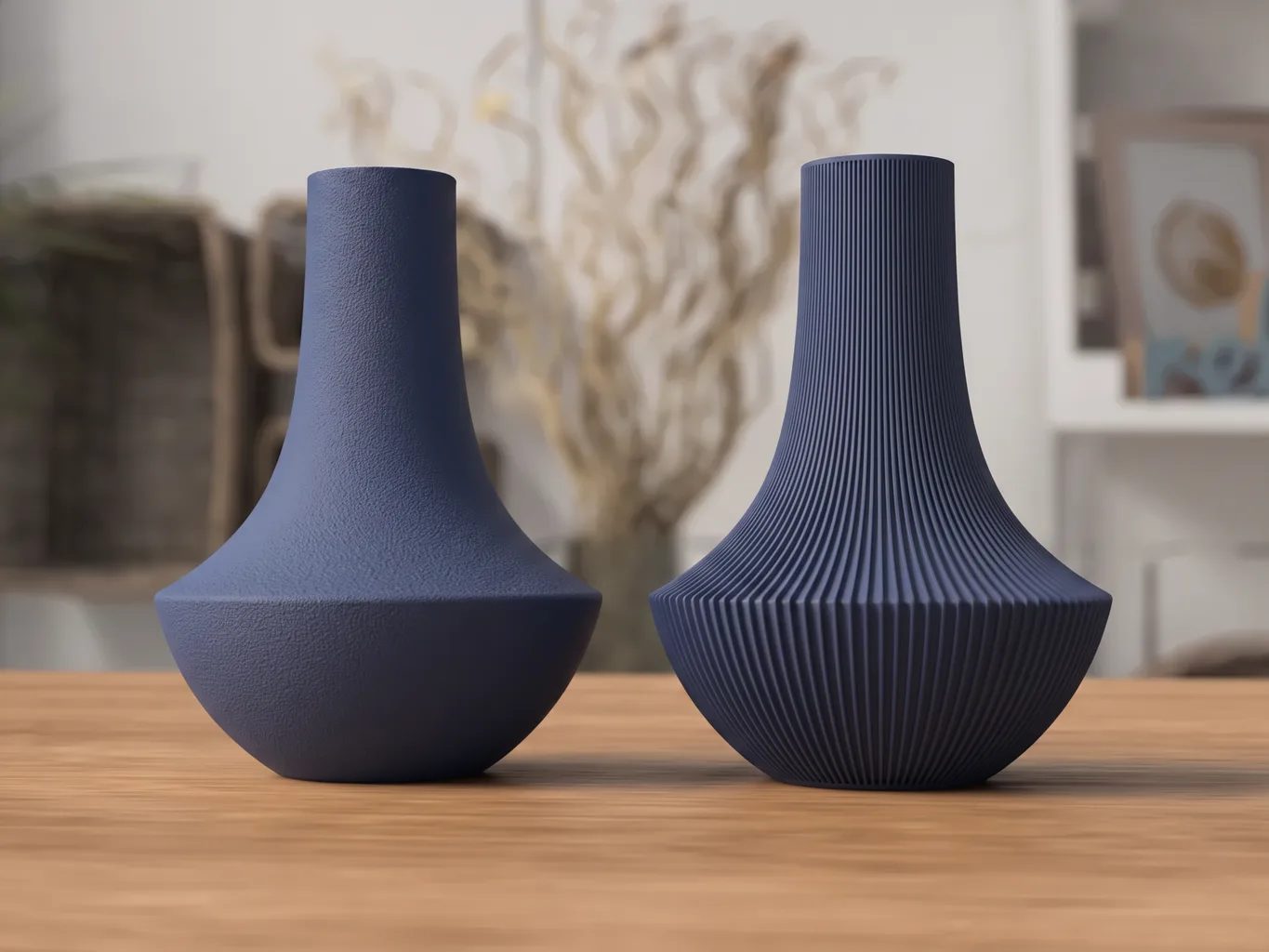
Deep tones next: Matte Black, Dark Blue, Khaki Green, Brown, Dark Red. They absorb light and transform the vase into a solid volume. This is the most elegant register on a crowded shelf or against a light wall, because the silhouette stands out sharply.
Vibrant colours finally: Matte Yellow, Matte Orange, Matte Red, Turquoise Blue, Matte Pink, Lavender Violet, Marble Brick. These don't blend in, they punctuate. One alone is enough in a room, provided you place it where the eye already falls.
See the colour before ordering
A colour swatch tells you nothing about what a colour becomes on an object. A one-centimetre beige dot and a 23 cm Beige vase under living room light are not the same information.
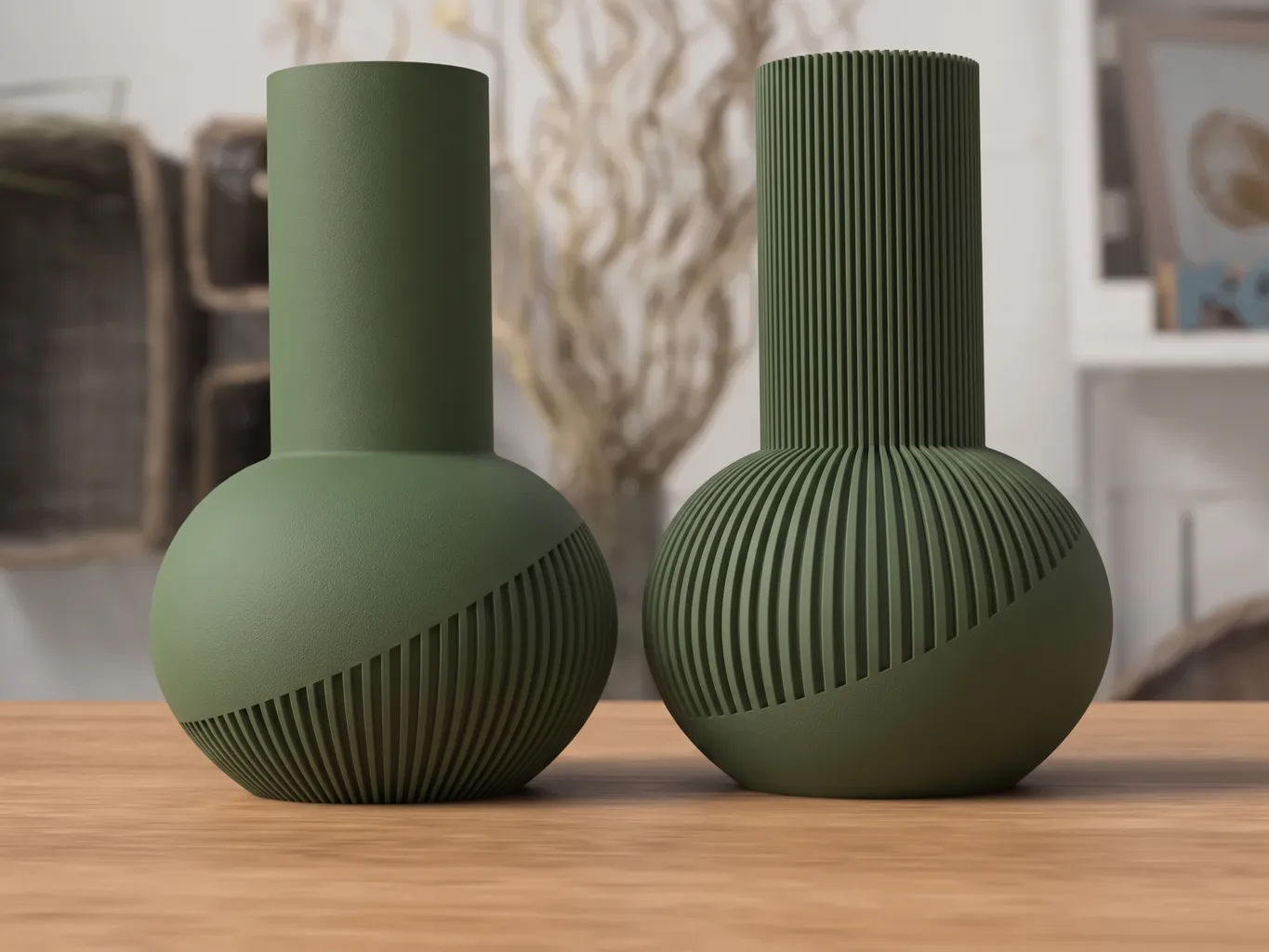
That's why each colour swatch on our product pages doesn't show a flat colour but the vase itself. Click on the shade you're interested in and the main image switches to that exact model in that exact colour, with its striations, shadows and relief. You see what you're going to receive, not an approximation.
This especially changes how you judge light and dark shades, for a reason of relief. Our vases are crossed by regular striations, both the ribs drawn into the model and the fine layer lines left by printing. On a light shade, all this relief reads as soft shadows and stands out considerably. On a dark matte shade, it fades and the silhouette takes over. The same vase doesn't tell the same story in Ivory White and Matte Black, and it's quicker to understand in one click than in three paragraphs.
What actually changes the price
Since colour is neutral on pricing, we might as well be clear about what isn't. Two things only.
Size. A 23 cm vase requires more material and more machine hours than an 18 cm one. On Hikari and Kage, moving from 18 to 23 cm adds £15. On Shizu, the most affordable in the range, the larger format adds £10 (£14 at 18 cm, £24 at 23 cm).
Finish. Some models come in several surface treatments, and here too print time differs. Shinto goes from £15 in Textured to £18 in Striped. Tama varies from £36 to £38 depending on whether the stripe runs at the top or bottom of the body.
That's all. No colour on any model triggers a surcharge. A Nami in Matte Red costs the same as a Nami in Beige.
Choosing your colour without getting it wrong
One rule above all: match the vase to the room, not to the bouquet. Flowers change every week, the vase stays for years. A vase chosen for a peony bouquet becomes cumbersome eleven months out of twelve.
From there, three scenarios cover almost everything.
You'll put dried flowers or pampas grass in it. Choose a neutral. Dried stems already have a broken colour, beige, linen, blonde, and two different beiges clash. Ivory White or Marble Sandstone let the plant material work alone. The guide to sizes for pampas grass details the heights that go with it.
You'll put fresh flowers in it. A deep tone frames the bright colour of a bouquet better than a light tone, which competes with it. Dark Blue, Khaki Green and Matte Black work with pretty much anything. Our article on how to choose a vase according to your flowers goes into detail by bouquet type.
The vase will stay empty. This is the only case where a vibrant colour is fully justified. An empty vase is a sculpture: it has nothing else to showcase but itself, so it can carry off a Matte Orange or Turquoise Blue.
Last tip for a group of two or three pieces: keep a single colour and vary the shapes, or keep a single shape and vary the tones within the same family. Mixing three shapes and three unrelated colours produces a shop shelf, not a composition.
And for a colour outside the catalogue
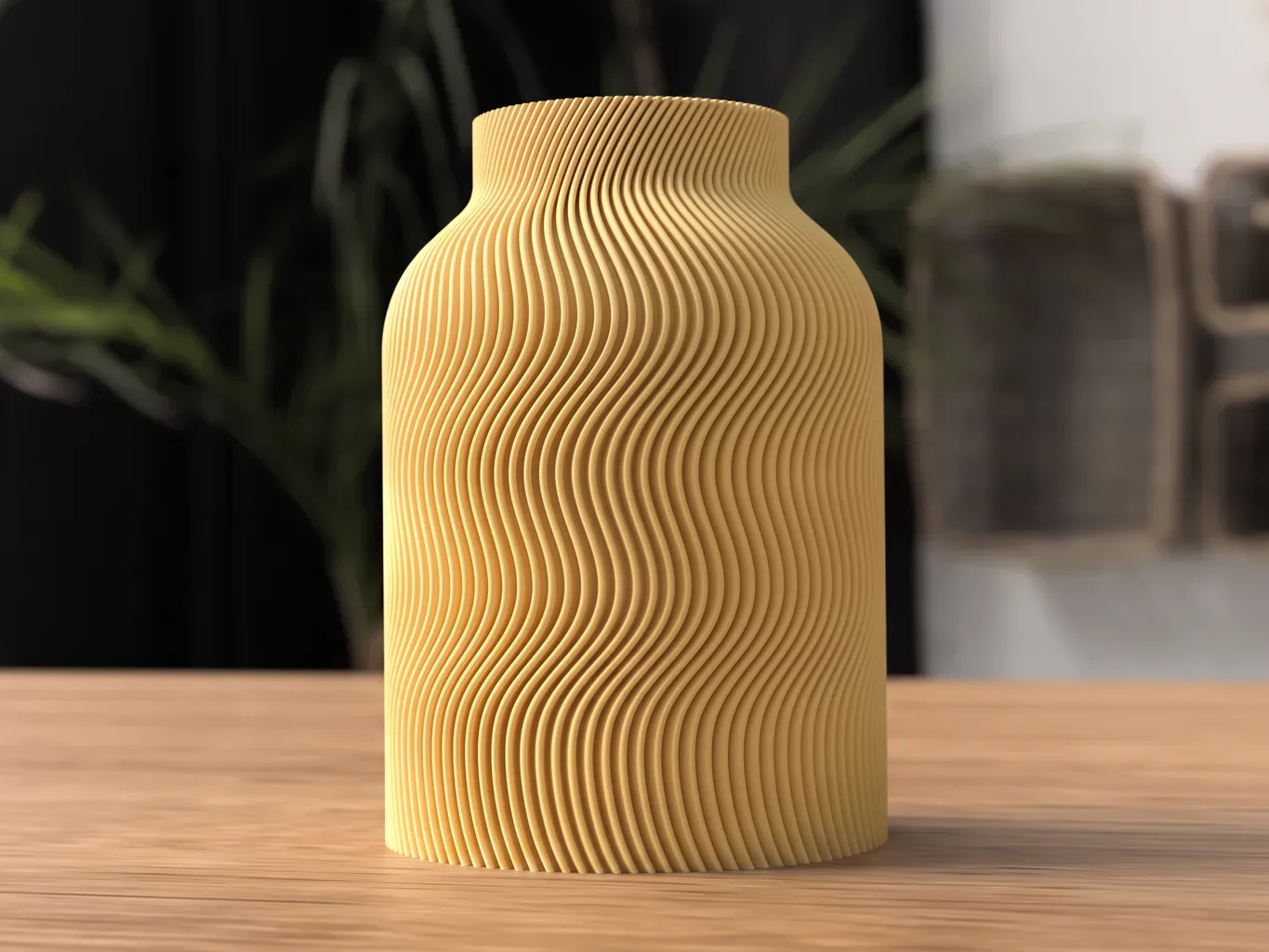
The palette evolves, and it's already grown considerably since we started. If the shade you're looking for isn't in it, the answer depends on volume.
For a single piece, we don't source a specific filament: the rest of the spool would sit on a shelf, which is exactly the waste our model seeks to avoid. For a series though, a florist order, a batch for a concept store or an object in a brand's colours, it's entirely feasible and it's even a common request. The subject is covered on our professionals page.
What happens after you click
Your order reaches the workshop, the spool of your chosen colour is loaded onto a free machine, and the piece prints. Allow 5 to 7 days before dispatch, the actual manufacturing and quality control time.
Our vases are printed in biosourced PLA, a bioplastic of plant origin. It's an indoor material: it begins to soften around 55 °C, which rules out the south-facing windowsill in August. Recycled PETG, more resistant to heat and UV, will join the catalogue in the coming months and open up outdoor uses. The difference between the two materials is explained in PLA or PETG.
One last thing about colour durability: the shade is in the material, not painted on the surface. A vase won't chip and won't scratch through to a white layer, because there isn't one. It dusts off with a dry cloth, and it will keep its colour as long as it lives away from direct sunlight.
Frequently asked questions
- Does the colour of a 3D printed vase cost more?
- No. No colour incurs an extra charge on our vases: they all cost the same price. Because each piece is printed to order, changing colour amounts to changing the filament spool, with no extra material or machine time cost. Only size and finish affect the price.
- How many colours are available on a vase?
- Around twenty colours are offered on each model, divided into neutrals (Ivory White, Beige, Wood, Marble Sandstone, Marble Grey), deep tones (Matte Black, Dark Blue, Khaki Green, Brown, Dark Red) and vibrant colours (Matte Yellow, Matte Orange, Matte Red, Turquoise Blue, Matte Pink, Lavender Violet, Marble Brick). The palette expands regularly.
- Can you see the vase in the chosen colour before ordering?
- Yes. On each product page, clicking on a colour swatch displays the vase itself in that colour, not just a flat colour sample. You see the exact model, with its print striations and relief, in the shade you're going to receive.
- Can you order a vase in a colour not in the catalogue?
- Not for a single piece: we don't source an entire spool for just one object. For a series though (florist, concept store, object in a brand's colours), it's possible. The request goes through our professionals page.
- Does the colour of a 3D printed vase deteriorate over time?
- The shade is in the material, not applied to the surface: a vase won't chip and won't reveal a white layer if scratched, because there isn't one. It cleans with a dry cloth. However, PLA is an indoor material, to be kept away from direct sunlight and surfaces exceeding 55 °C.
- What is the price of a personalised 3D printed vase in colour?
- Our vases range from £14 to £38, depending on the model, size (18 or 23 cm) and finish. Colour is included in this price regardless of which shade you choose. Each piece is printed to order in Guérande, within 5 to 7 days.