Plant pots
3D printed plant pots for houseplants, succulents and orchids. Sculptural designs with matching accessories, made from plant based and recycled materials.
17 models available · 5 to 7 day lead time · Printed in France
Our plant pots are 3D printed to order in Guerande, France, from plant based PLA. Seventeen models, from a small container for a succulent to floor sized volumes, all available in around twenty colours. Made in 5 to 7 days, with no stock and no overproduction.
The range covers very different uses. Sora and Riku hold a succulent or a cactus on a desk. Kuro, Mitsu and Sekiya take on established houseplants. Hangis hangs. Several models come with a matching saucer printed in the same colour, which keeps rings off your furniture. To pick the right size, our guide which design flower pot for which plant works through the range, size by size.
Indoors, outdoors, watering
PLA behaves very well indoors. Outdoors, prolonged full sun is the real limiting factor, more than rain: we set out what survives outside and what does not in our article on terrace decor. For watering, the simplest approach is to keep the nursery pot inside the printed one and lift it out to water.
The choice of material is not incidental, and we stand behind it: is PLA really ecological answers plainly, with figures. For a purely decorative container, our vases share the same colours.
Alto
31,00 €
Ringia
17,00 €
Mitsu
39,00 €
Yora
17,00 €
Quartis
11,00 €
Hangis
25,00 €
Kuro
39,00 €
Daichi
24,00 €
Sora
10,00 €
Moss Budy
14,00 €
Stemra
26,00 €
Kaito
28,00 €
Riku
9,00 €
Juno
12,00 €
Minato
15,00 €
Negane
8,00 €
Sekiya
38,00 €
- What material are your plant pots printed in?
- Plant based PLA, printed in our workshop in Guerande, France. PETG, which copes better with heat and temperature swings, will join our ranges in the coming months.
- Can I water a plant directly in the pot?
- The simplest approach is to keep the plant in its nursery pot and use our piece as a cover pot: lift the nursery pot out to water, then put it back. Several models come with a matching saucer that protects your furniture.
- How long does it take to make?
- 5 to 7 days. Each pot is printed after you order, in the colour you chose. Nothing is made in advance.
- Can your pots stay outside?
- On a sheltered terrace or a balcony, yes. The limiting factor is not rain but prolonged full sun, which eventually marks the material. Our article on terrace decor sets out what survives outside and what is better kept indoors.
- How do I clean a 3D printed pot?
- Damp cloth and mild soap. No dishwasher and no boiling water: PLA softens around 55 to 60 °C.
- How are these different from your vases?
- Pots are made to hold a living plant, with the accessories that go with it, saucers and hanging models. Vases are decorative containers for cut or dried flowers. Both families share the same colours.
Read next in the Journal
All articles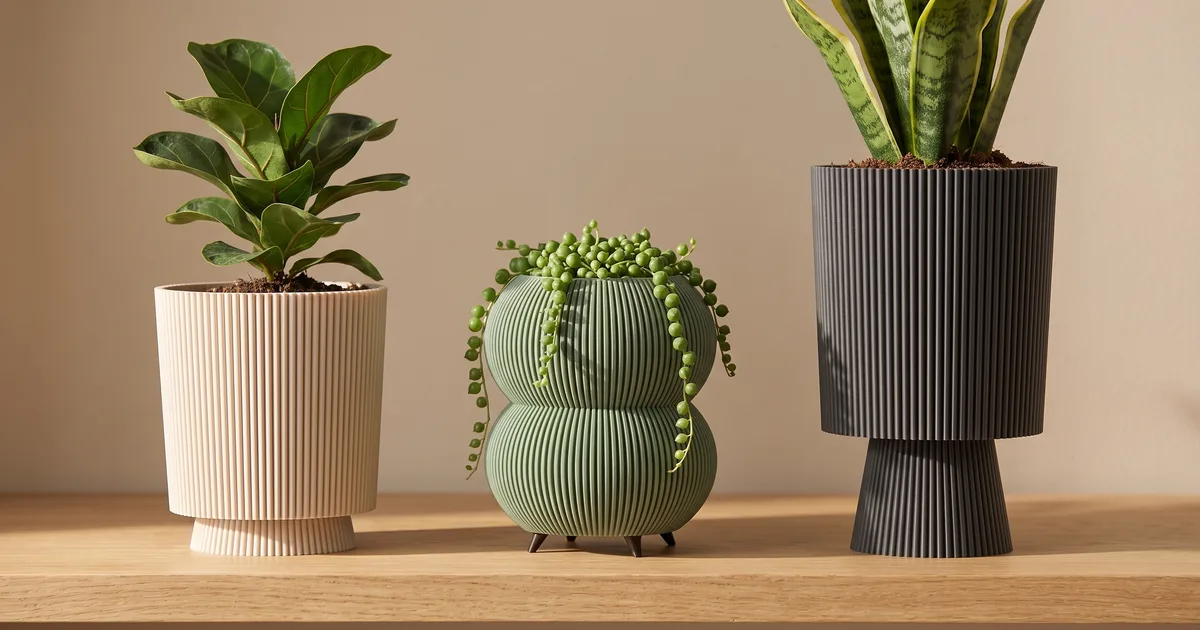 Pots
PotsCachepot or pot with drainage holes: which to choose for which plant
A pot with drainage holes on its saucer for a plant you'll keep for years, a cachepot for a plant that stays in its nursery pot. How to tell the two apart in our range, and which plants really need drainage.
 Plant pots
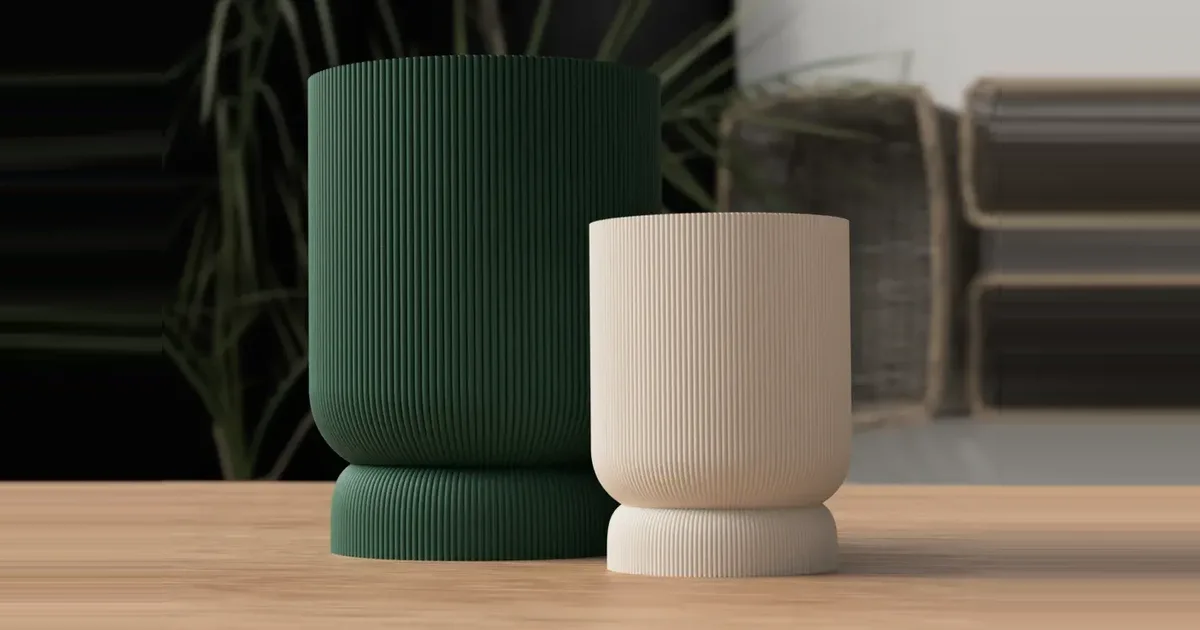
Which design plant pot for which plant?
A pot is chosen by the diameter of the growing pot, not by the shape of the plant. A guide by size across our seventeen models printed in Guérande, from the succulent at Ø9 cm to the 71 cm plant column.
 Material & fabrication
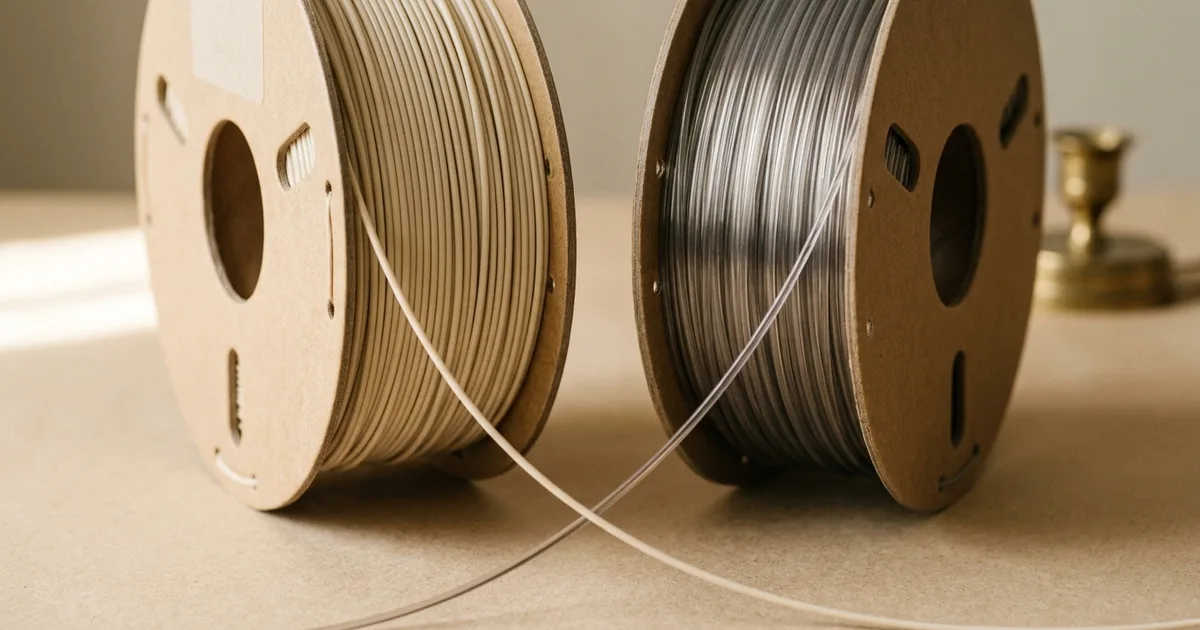
PLA or PETG: which material for which décor object?
Biosourced versus recycled, interior versus exterior, matte versus satin: PLA and PETG don't play the same role in a home. A simple decision framework from a workshop that prints everything in-house, to choose the right material without technical jargon.