Soliflore: when one stem is enough, and which to put in it
A soliflore holds a single stem. Shizu, Shinto, Ringia, Pumpkin Vase and Quartis: which stem to put in each, which ones accept water and where to place them. From €11 to €25 starting price, printed to order in Guérande.
By L'atelier RE3DLINE
A soliflore is a vase made for a single stem: its narrow neck holds it upright, without any other support. It is chosen on two points, the shape of the opening and what the stem requires, water or nothing. The five pieces presented here, printed to order in our Guérande workshop, have a starting price of €11 to €25 depending on the model.
A soliflore is recognised by its neck
The soliflore lives up to its name: it is the vase for a single flower. The Robert dictionary defines it as a "vase intended to receive a single flower". If you are looking for what to call a vase for a single flower, that is the word.
What makes a soliflore is not its size, it is its opening. A vase with a wide neck lets a single stem tip against the edge; a soliflore holds it by the neck, upright, without foam or pin. A tall vase can therefore be a soliflore, and a short vase with a wide opening is not one.
Our catalogue offers four ways to hold a stem: a bevelled neck, a long straight neck, a ring topped with a short neck and a row of tubes. Added to this is a pumpkin with a small neck for a few dried stems. Each shape calls for its stems, and not all accept water in the same way.
A leaf, a cutting or a dried grass
What flower should you put in a soliflore? The one you want to look at alone, and it is not necessarily a flower. Our own photos show this: a monstera leaf on its stem in the Ringia, rooted cuttings in the tubes of the Quartis, two stems of dried grass in the Pumpkin Vase.
The choice rule comes down to three cases. A fresh stem requires a piece that accepts water. A dried stem goes in any of them, since it requires nothing. A cutting lives in water while it makes its roots, and a transparent tube lets you see their progress.
For dried stems, the Journal has already spoken of pampas grass and lagurus: a single stem is enough to fill a narrow neck. A pampas grass in full plumes, on the other hand, requires another vase, we come back to this later.
Shizu, the drop with a bevelled neck
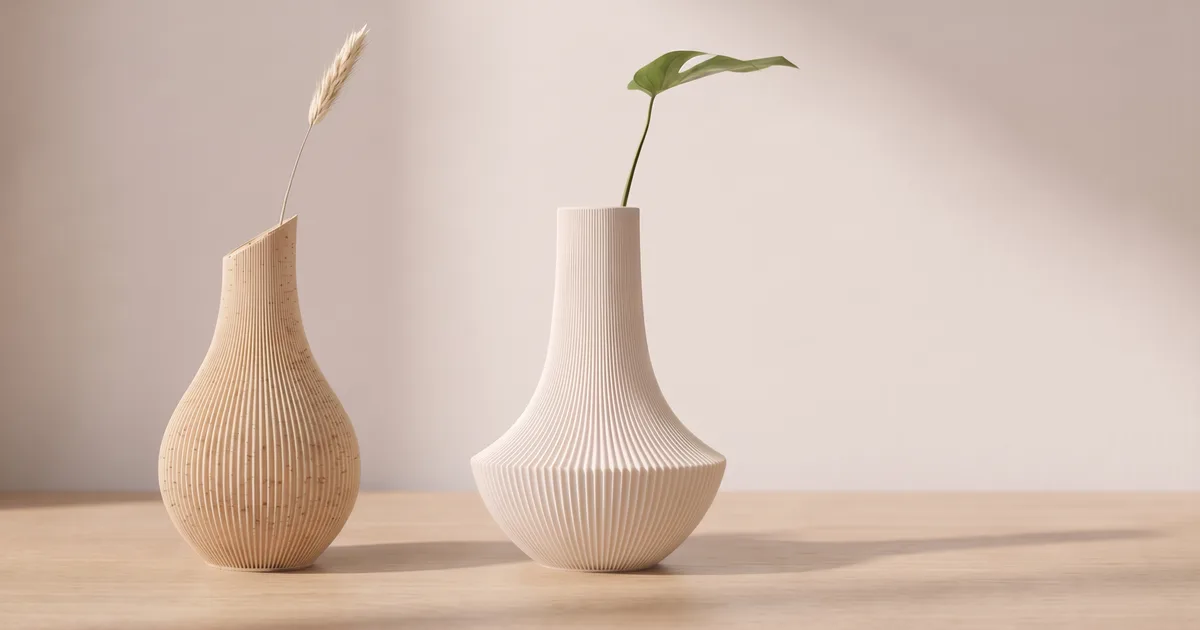
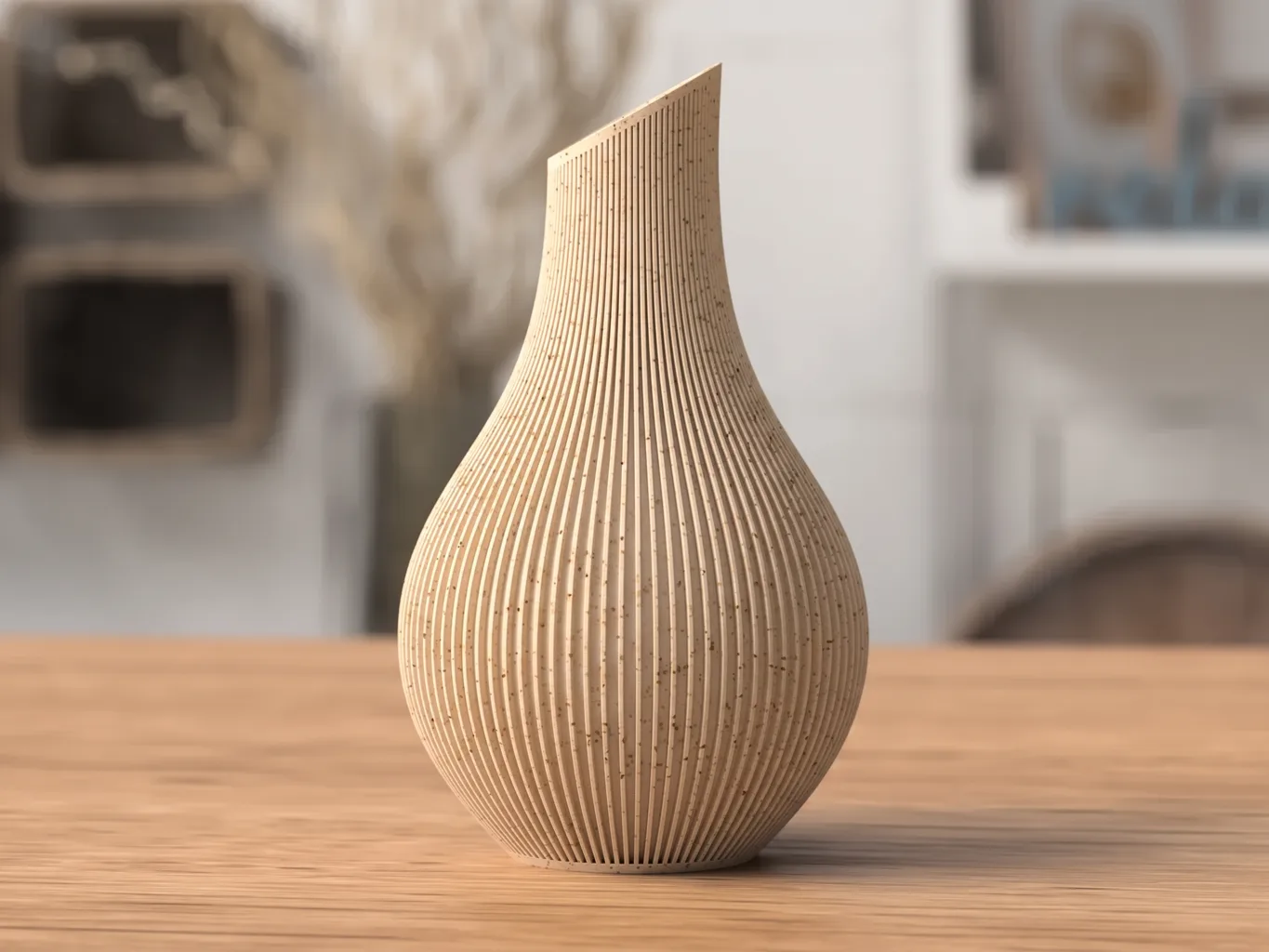
The Shizu is a drop with a subtly textured surface, closed by a very narrow neck cut at an angle. This bevel orients the stem and gives movement to a composition reduced to a single stem. The product description speaks of a "soft and harmonious silhouette inspired by Japanese artisanal forms".
It comes in two heights, 18 cm and 23 cm, from €14, in around twenty colours. Like the entire vase collection, it is treated in the workshop with a technical resin that impregnates its walls: it accepts water, so a fresh stem.
Shinto, a long neck set on a bell
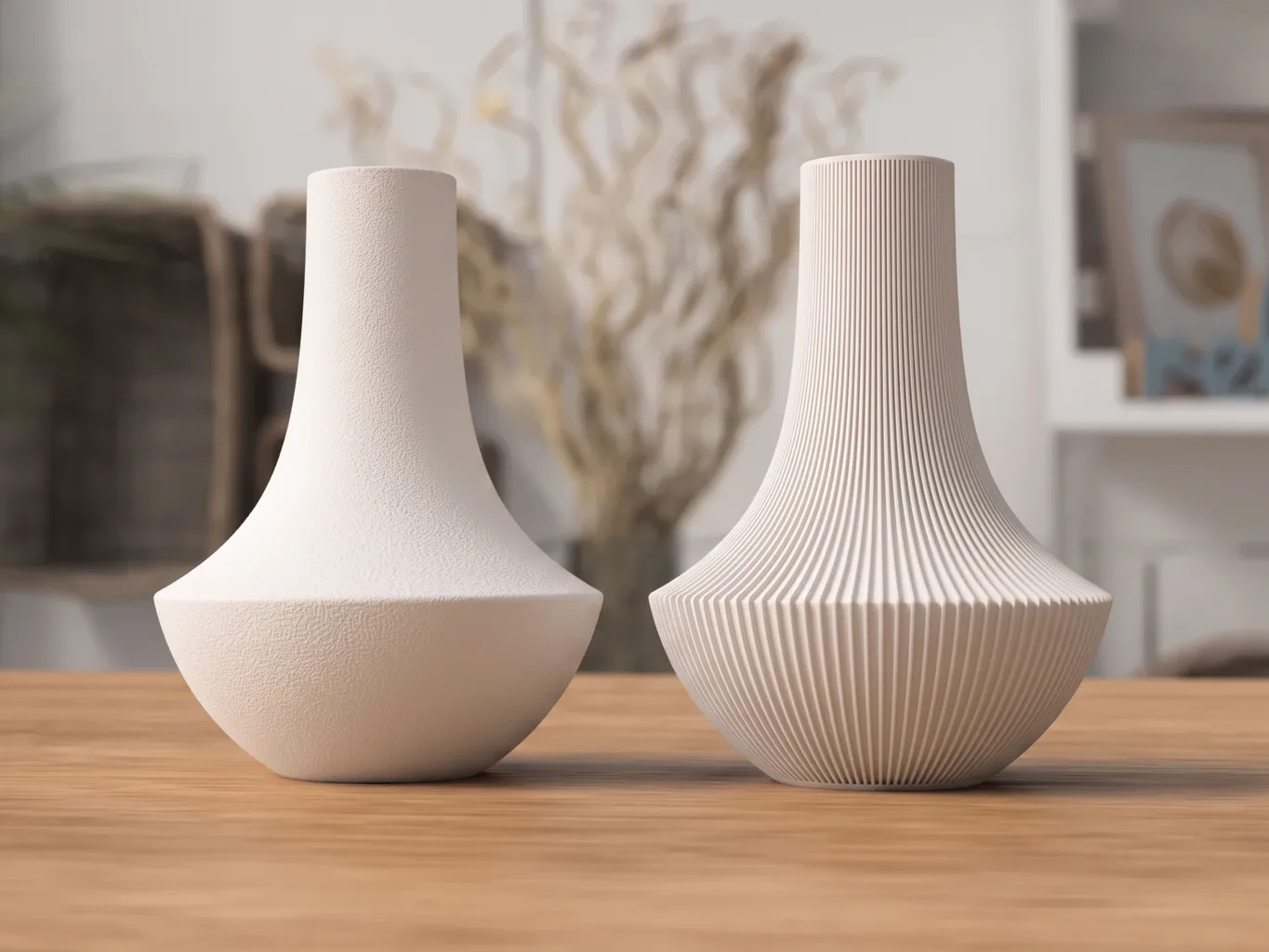
The Shinto starts from a low bell-shaped base, from which rises a long, narrow, straight neck. This narrow neck holds the stem vertical, and the bell gives it its base.
It is ordered in a single size, 18 cm, from €15. Two finishes are offered: Textured, with a granular surface, and Striped, with vertical ridges. It is part of the vase collection and receives the same resin treatment as the Shizu: water is possible.
Ringia, a ring topped with a neck
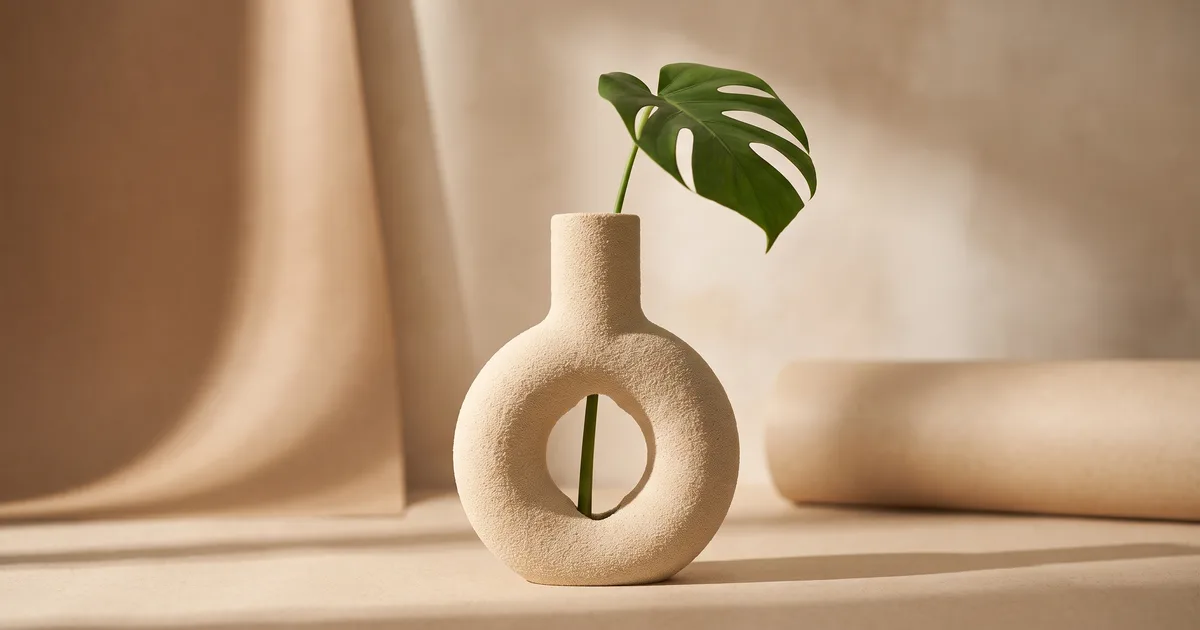
The Ringia does not look like a vase. It is a flat piece in the shape of a ring, pierced with a central opening and topped with a short neck. The product description speaks of an "artistic silhouette" that "transforms each stem or flower into a true decorative element". In our photos, each piece bears a single monstera leaf on its stem.
It is sold as a set of 2, from €17, in a single size of 3.5 x 11 x 14 cm, or 14 cm high. Each vase in the set is a single colour, and each can be chosen from around twenty colours. It is listed in the pot collection, not in the vase collection.
For a fresh stem, a transparent tube provided receives the water and the stem: water goes only in the tube. For a dried stem, it is used as is.
Pumpkin Vase, a few dried stems for autumn
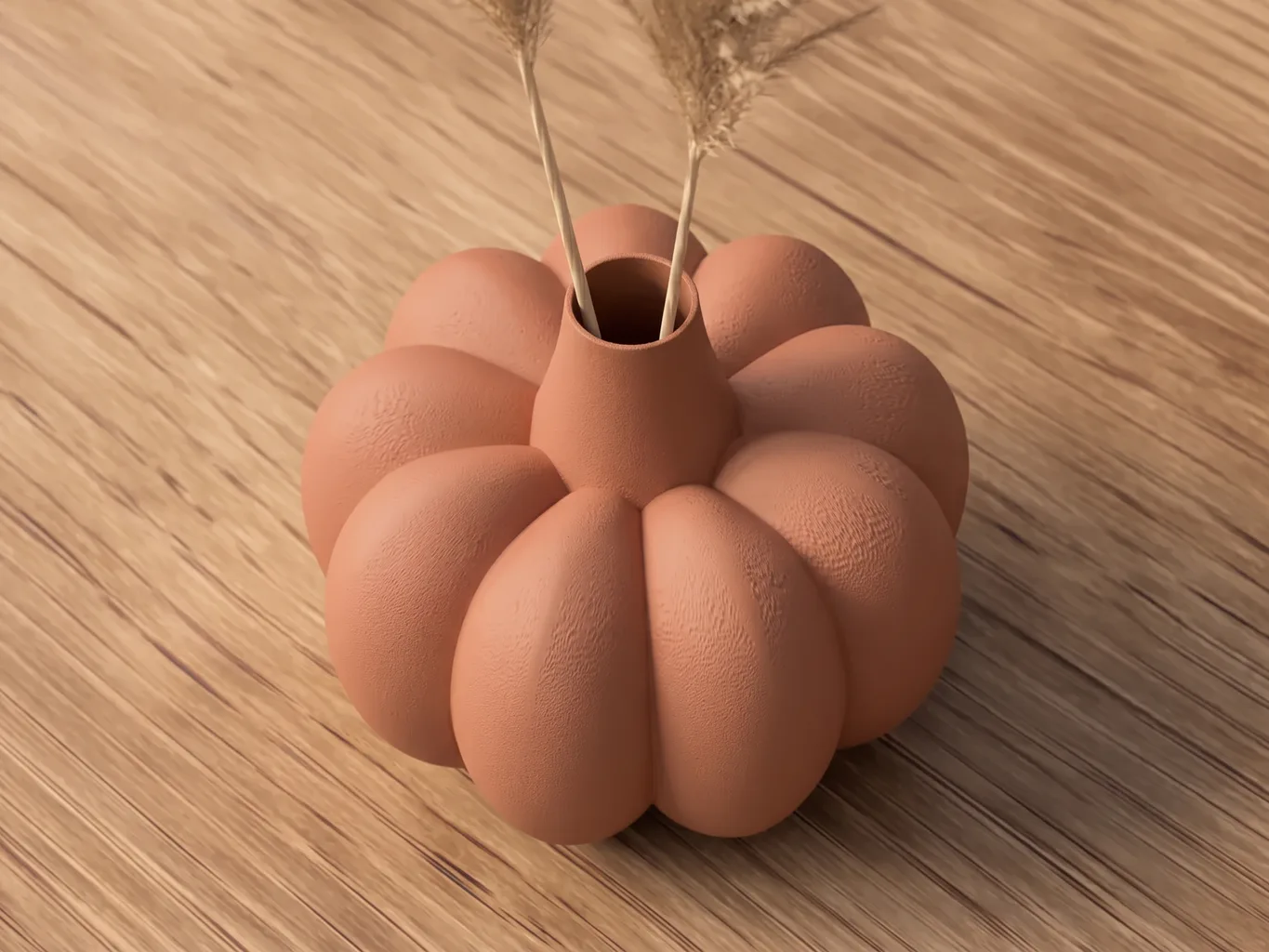
The Pumpkin Vase is a pumpkin with rounded lobes, topped with a small narrow neck. It is not a soliflore in the strict sense: according to its description, its central opening "allows you to welcome a few dried flowers, branches or decorative stems". In the photo, two stems of dried grass are enough to dress it.
It measures 18.5 cm in diameter and 15 cm in height, from €25. It belongs to the autumn collection, whose colour range is the only one in the catalogue to offer Terracotta, the colour in the photo. The description says it is "ideal for dried flowers and decorative arrangements": it welcomes dried stems only.
It extends the palette detailed in autumn décor: terracotta, sand and warm light.
Quartis, four tubes for rooting
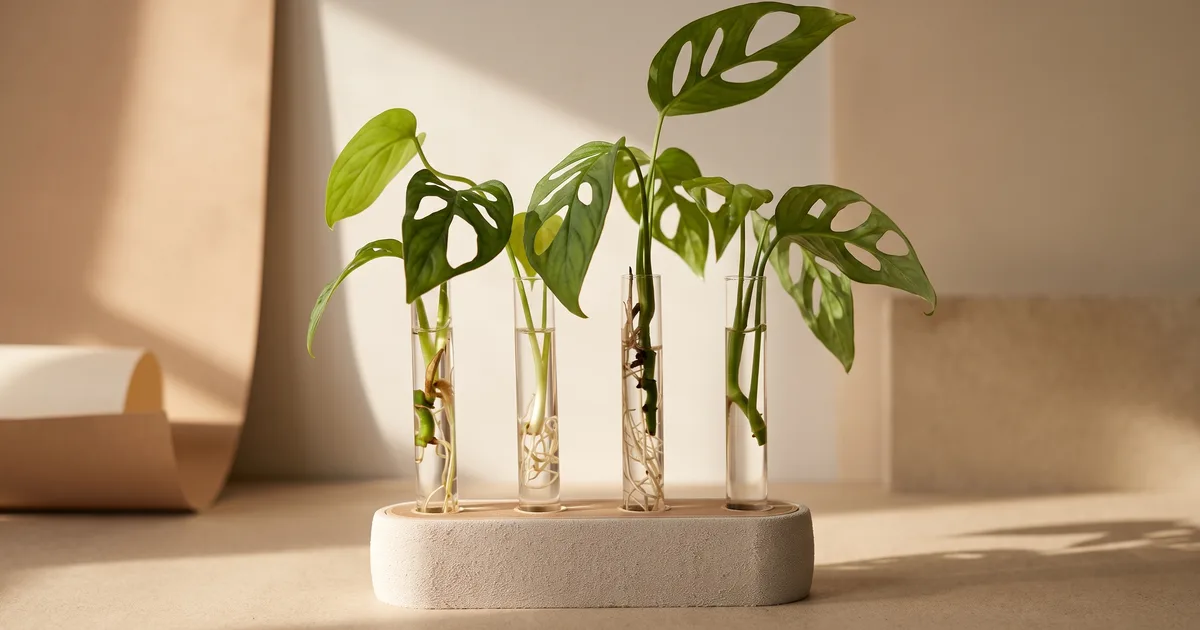
The Quartis is the soliflore's cousin: an oblong, low base that carries four transparent tubes aligned, one stem per tube. Its description presents it as a support "to showcase your cuttings and plant arrangements", with a "refined horizontal design". The photo shows it with cuttings that have rooted in water.
It is ordered in a single size of 6.5 x 21 x 4 cm, from €11, tubes provided. The top (the face with four holes) and the body (the sides) can each be chosen from around twenty colours. Water goes in the tubes, the base holds them.
When a cutting has rooted, it leaves its tube for a pot. The choice of pot according to the plant is detailed in which design flower pot for which plant.
What each piece accepts: water, dry or tubes
Before choosing the stem, check what the piece accepts. Here is the point piece by piece.
Shizu and Shinto: water. Both belong to the vase collection, treated in the workshop with a technical resin that impregnates the walls. Use cold water, wash by hand, never in the dishwasher. Details of the treatment can be found in can you put water in a 3D printed vase.
Quartis: water, in the tubes. The transparent tubes are provided with the support and receive the water from the cuttings.
Pumpkin Vase: dried stems only. Its description is intended for dried flowers, branches and decorative stems.
Ringia: water, in its provided tube. A transparent tube provided receives the water and the stem; water goes only in the tube. For a dried stem, it is used as is.
A soliflore, a single point of focus
A single stem catches the eye because it is alone: place it where nothing competes with it. The Quartis description cites three locations, a desk, a shelf or a windowsill, and they apply to all five pieces.
On a desk. A stem in your field of vision, without getting in the way of the screen or keyboard. The Quartis, long and low, slips in at the foot of a screen.
On a shelf. The Shinto, with its long neck, takes its place between two stacks of books. The Ringia is viewed from the front, the ring opening facing the room.
On a windowsill. The Quartis cuttings have daylight there. Avoid, however, the windowsill placed above a radiator: PLA begins to soften around 55 to 60 degrees Celsius, and a piece placed on a heat source can deform.
Beyond one stem, change your vase
The soliflore ends where the bouquet begins. As soon as you bring together several flowers, you need a vase whose opening and height follow their number and length. This is another question, covered in how to choose a decorative vase according to your flowers, with the ratio between the height of the stems and that of the vase.
The same applies to pampas grass in full plumes: it requires a stable vase. Our bottle vases with marked shoulder, Hikari and Kage, play this role, and the choice of size is explained in vase for pampas grass: the size guide by size.
The opposite is also true: a single stem in a bouquet vase looks lost. It is the neck that makes the difference, not the height.
Printed after your order, in the colour you choose
None of these pieces wait in stock. Your order arrives at our Guérande workshop, we load the spool of the colour you have chosen, then the piece is printed in biosourced PLA, deburred, checked and packaged. Allow 5 to 7 days of manufacturing before dispatch, then delivery time. In France, delivery is a flat rate of €6.90 including VAT, free from €80 of purchase.
The Shizu and Shinto are found in the vase collection, the Ringia and Quartis in the pot collection, the Pumpkin Vase in the autumn collection. To see where and how they are printed, read an hour in the RE3DLINE workshop.
Frequently asked questions
- What is a soliflore?
- A soliflore is a vase intended to receive a single flower, according to the Robert dictionary definition. What distinguishes it from a small vase is its narrow opening, which holds the stem upright without any other support. At RE3DLINE, the Shizu and Shinto are soliflores with narrow necks, printed to order in our Guérande workshop.
- What flower should you put in a soliflore?
- A single stem that you want to look at alone: a flower, a leaf or a branch. A fresh stem requires a soliflore that accepts water, such as the Shizu or Shinto; a dried stem, pampas grass or lagurus for example, goes in any piece. Our photos also show a monstera leaf in the Ringia and rooted cuttings in the Quartis tubes.
- Can you put water in a 3D printed soliflore?
- Yes for the Shizu and Shinto: like our entire vase collection, they are treated in the workshop with a technical resin that impregnates the walls. Use cold water and wash them by hand, never in the dishwasher. The Quartis receives water in its transparent tubes provided; for the Ringia, a transparent tube provided receives the water and the stem. The Pumpkin Vase welcomes dried stems only.
- What size soliflore should you choose?
- The Shizu comes in 18 cm and 23 cm heights, from €14; the Shinto in a single size of 18 cm, from €15. The Ringia measures 14 cm high (3.5 x 11 x 14 cm), is sold as a set of 2, from €17, and a transparent tube provided receives the water and the stem. More than size, it is the shape of the neck that matters: it must hold the stem upright.
- Are the Quartis support tubes provided?
- Yes, the Quartis description indicates this: the tubes are provided. The support measures 6.5 x 21 x 4 cm and carries four transparent tubes aligned, one cutting or stem per tube. It is offered from €11, in around twenty colours.
- How long does it take to manufacture and deliver a soliflore?
- Each piece is printed to order in our Guérande workshop: nothing waits in stock. Allow 5 to 7 days of manufacturing before dispatch, then delivery time. In France, delivery is free from €80 of purchase.